20 Apr 2024

Qiisak Soomalih net abta wararak/ Carbik lafale ximmooma:

Qiisak Soomalih net abta wararak/ Carbik lafale ximmooma:

• Ta carbi wagsiisak mango tutaaxago kusaaqitte elle abteeh, Qiisak Soomalih lago baatilih qafar baaxot abta warar kinnim kee ta wararak amolladi oytitte sumaqta luk kusaqittel qaduk daffeyteh tan. Aydaadi alhumitte kaadu aracal kak tan. Tohih taagah Qafarat le baaxol baatilih yakke warar kinnim igmam matan. Qiisak soomalih woh isih digga haytaah, akah soole kak waanam makkook aban carbi kinniim( Dr Yasin Md, Muaz gidey, Qalo yayyoh kitab w.w.w).
• Qiisak Soomalik tengele Qarkakisa,  Qafár baaxóh bukkoh Abta carbi, annaak saqi leek qaysooy, amok radah hinnaay, xayi daban qaynoonisen Carbi Kaadu hinnay;  malaa kee makko akah daffessa heenih, 1936 liggidaak qimmisen xer waktih Strategyil yakke warara.(Gubal gabak oson bicsen karta wagita kee Qafar baaxo elle koborak yemeeten inna tayballe Map wagita).
• Ta Carbi kaadu wadar qiisay foyrot akak yanit yaade carbi hinnay qanxaffele Caylitteh qokol kee miraaciinol akkuk yemeete warara. Tilyaana, kaxxa soomali, Jabuutiik ilaa warreyteh tan doolatitte derret gacak takke fanah wadbisen fixixi.  Tilyaanay itiyoppiya wararteh qaxo akkuk oson keenih yeceen aydakan, silac kee qokolut, tilyaan boolasseh sugteeh, qasri silaacak tusinnuk sugteh tan Qafár ummatta, Ereriiy mullu dufsaanam duuden. Lakal kaxxa soomalik geen qokolut qafar bisoh gutuqak mulluuk ilaa afdam fanah kobraanam duuden.
•  Itiyoppiyal taturra'te doolatitte axcih Hailesillaseek ilaa Melles xinto fanah Qiisak Soomali ilaa dat gita fanah guftuh kaxxa doori keenih digirte. Tohum Jabuuti kee Kaxxa Soomalit luk sugen qalla kee tummaqittih sabbatah tekkem bictah.
• EHADIG Itiyoppiyah xinto gabat  luk sugteh tan taturte 28 liggiditteh addat kaxxa carbi abekal Federaal doolatih xintoh qokolut qafar baaxo fidinuk  kobraanam duuden. Tohum Dumah Qafar akak dufsen Erer edde yan rasu Soomalih Rakaakayih gubat akah raaqannah faaticisaanem dibuk hinnay Ciwaacat abbobti Jabuutit luk sugte qalla kee Kalali qandeh saqolti Qiisak soomali lih luk sugteh tan tuxxiq angaarawih sabbatah, Qafar ummatta le baaxok deesak Qiisi ilaa sidiica magaala fanah culsaanam duuden.
• Farangi loowok 2011 liggidah gexsiisen wagri mablol,  woo dabaanal Federal caagidah Malaak sugeh Yan Abbay Tsehaye, Calli mabla axcuk "Qiisak Soomali elle  nokteh sugte sidiica magaala kee Weeqayti dareefay gabat luk sugeenih yaniini ,Soomalih Rakaakayak Shinille Rasut Akah raqtannah" calli mablah xayyoose.(Screen shot kutbel wagita). Wohum Qafár mirocti cinteeh, woo mara edde diiriyen. Lakal Siidica magaala qafar gubat anuk qiisi isih is elle xiinisay axcuk Keenih gabbissa margaqa elle yeceeniih, taham Federaal doolat keenih abak temeete qokol tayballeemi.
• Ilaa ahan fanah tanih tan xinto fanah, away tan Rakaakayittê fanih maaduk taturak Qiisak Soomalih lagok iro kee addak maagoowak qaduuk dat gital abak temeete wararitte, gaanuunul waaso lem kinnim amixxiguk Federaal doolat uxih namma Rakaakayittel maadul yakke bood axcuk muggaaqissa.
• Federaal doolat taturte 5 liggitteey ilaa ahan fanah Qiisak Soomali abtah tan wararat Irô gabah culsi yanim, xayyowteh tan sumaqtittel qaduk cedday immay wali calli akah matacaay namma cuggaaneh cuduudul yakke carbi ceelisak gexan.


Amolladih Qiisak Soomali Qafarat abtam ux wakti kee amok radah yakke warar hinnay Makko kee malal xer waktil ekraaro akkuk yemeeteeh, qanxaffele caylitte derret akak tan carbi kinni.
Too Qiisak Soomali gaadul baxaysiteey, qusba bicah wakti faxe yakken uddur salaam fanxa axcuk Bicsitaanah gide carbi akah soolannah federaal doolat le kabuk wagri mablo absiisak yemeeteeniiih uxih wonna. Aydaadul ta warar qimmiseenimih ta warar sooluh kee wagri wagsiisak Mango sittingey, xagana kee mablo tekkeh immay sarrimaanele calli mabaahinna. Tohuk baritnu dudnam Qiisak Soomali isih faxxa uddur wakti fanah absissa miqno akkewaytek sarriino le calli mayana yaanama.


Sarriino le calli edde Aham fanah akah abak nemeetennah ni guubuk ken edde ugusnah nan goori giclo maqrisnaama. Koborne baaxol dumak aysuk giffole nooko abak Qusbih koborre baaxo diggosnam fanah Negotiations ken luk abak rabbo edde faxxinta waktit rabbo abak atka faxxinta uddur abak bisoh innaama. Ahan fanah akah abnannah oson elle faxan innal oson aatukek soolise yakkeenim keenik qambaalak gersi fayxit gennam mafaxxinta.


@Adalpost

4 Mar 2024

Afar Dagu(Wireless information network)

The Afar society, living in one of the nine regional states of Ethiopia and located in the northeastern part of the country, is a very good example here. The Afar people have an established traditional communication network called Dagu. Dagu is the largest “wireless”, so to say, traditional news network in the Horn of Africa that connects the Afars living across three neighboring countries – Ethiopia, Eritrea and Djibouti. As a result, Afars, who are Muslims and speakers of a Cushitic language, have a cross- border nationality (Bryden, 1996).

Mainly based on word of mouth, the Afar society has been using Dagu’s network, which “is a highly developed traditional system of information management” (Chege et al., 2004, p. 29). In most parts of the world, news is communicated through mass media radio, television, newspaper and the Internet.

Usually through these channels, the news goes to its target audience. In the Afar society, however, the reverse is true. It is the Afars that go to the news and it is Dagu - word of mouth - that communicates the news. As Morell (2005, para. 3) writes: It is through Dagu that they [Afars] learn of any newcomers to their desert realm, of the conditions of water holes and grazing lands, of missing camels and caravans.

They learn of weddings and funerals, of new alliances and betrayals, of the latest battles fought, and the conditions of the trail ahead.
Due to its growing popularity especially among local mass media in the country, Dagu has managed to attract the interests of many people - from development researchers to communication experts, from journalists to ordinary people.

Besides, recent studies on the Afar society make a remarkable reference to Dagu by considering it not only as a good source of information that serves the Afar people but also as a communication system that has a latent potential as a means of development (see Kelemework, 2011; Chege et al., 2004). Though there were only very few links on the Internet that contained information related to Dagu, for example before 2008, within the last three years many texts on various topics (health, pastoralism, education, water services, etc.) making a reference to the traditional news network (Dagu) have been uploaded to the Internet. Nonetheless, several publicities and references have been made about Dagu while it is not yet seriously studied and documented. Despite the fact that Dagu has been there among the Afars since time immemorial, it is not yet duly studied.
..

When the majority of the world is virtually dependent upon journalists to know about the happenings around them and the globe at large, the Afars rely on each other as any adult is a traditional newsman. In the Afars’ domain reporting is not a monopoly of radio, TV or in short of journalists. Rather every Afar is a reporter. “When two Afar people [sic] meet, they sit down and spend some time… discussing the major economic, social and political events that took place recently in their respective localities” (Kelemework, 2011, p. 426).


With regard to its meaning, Dagu can take a narrow as well as a more broad meaning. When someone says “Do you have Dagu?” he or she is asking whether the person has new information. In this case, Dagu means information or news. According to the key informants, Dagu “is information; it is the exchange of news and a narration of events”.

Dagu is the process of passing as well as receiving information or news about what two or more individuals have seen or heard. It is a news medium that serves all members of the society virtually equally regardless of their social status. However, it is worth noting that women play fewer roles than men simply because they “are relatively lesser in rate of mobility compared to men” (Gulilat, 2006, p. 75).


The finding of the study revealed that Dagu, as opposed to mass media, is a highly interactive and multi-way communication network, which serves the Afar society equally. The findings of the study also revealed that the Afars have unflagging enthusiasm to obtain fresh information, and regardless of being a traditional newsman, they have remarkable journalistic skills. Every Afar is a moving news medium. The study thus maintains that Dagu has more similarity to journalistic practices than to models of mass communication flows.

Watch Video about Dagu
https://youtu.be/PLRKH3NKWGA?si=NxlVZGNX9pkhXqZF
 

28 Feb 2024

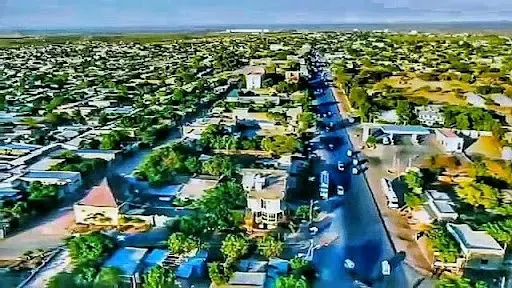
Abala City Administration


Abala City Administration

Abala City is a city located in  Northern zone (kilbatti rasu) Administration of theRegion. Abala serves as the Capital of Kilbat Zone Administration.


17 Feb 2024

Awash Subah City

Awash Subah City
Awash Subah City administration is a City in southern zone of Afar Regional State.
Awash subah Airalview, 2024
     

7 Feb 2024

DAGU: Afar People's indigenous information exchange system.

DAGU: Afar People's indigenous information exchange system.

The Afar people are a society with many traditional values.  One of the values ​​that have been passed down from generation to generation for the past several years is the Dagu system. It has served as a great means of communication for many years without modern communication tools and is still serving as a wonderful traditional means of communication.

Dagu is a traditional means of communication that has been with the Afar people for centuries and cannot be separated from the Afar identity. Dagu is a method of information exchange between Afars of different ages and genders based on the traditional system.
Different studies have given different interpretations, among which the following are cited.

• Dagu literally means news in Amharic or /news/as in English.

• Dagu is not only listening to and watching information, but it also embraces the cultural responsibility/obligation to convey to others what he has heard and seen.
 From the point of view of contemporary technology, Dagu is a fast wireless data exchange method.  It is a traditional method of information exchange in which information reaches many people in a short period of time without using any technology.

When the Afars received and inherited it from generation to generation for centuries, they inherited this great value from their ancestors to their children and grandchildren, and their grandchildren inherited it in the same way.

For the Afar people, Dagu takes it as their life because it is seen, done and expressed in every event. For example, especially as the Afar community lives on the move from place to place, to find where it rained, lost camels;  It is important because it explains in detail what is happening in the city and what has been done.

It is common for two people who meet on the street to stop and hug each other.  Both individuals exchange information about new events, which is a traditional responsibility among Afars.  Every Afar person fulfills his responsibility by giving and receiving Dagu.  No one says I'm in a hurry.

In Dagu information exchange, the source of information is given special attention, fake information is never accepted.
The person transmitting the information, who gave it to him;  After that, it is checked who the third person is who gave it to the person who gave it to him, and the reliability of the information is properly checked.

Among the Afars, dagu can be done in different places.  Dagu is carried out by business travelers, water sources, market places, when two people meet, etc.
Interfering while one is talking while the dagu is being performed is strictly forbidden.  The older person is given priority to start Dagu.

Dagu is one of the most understudied cultural heritage of our country.  If you study Dagu, you can learn many things that can be passed down from generation to generation.  It can be enhanced by enriching the values ​​that are important for the modern world of communication.
Dagu is not only exchange of information but it also wealth of knowledge and skills that is transmitted through it from one generation to the next.

The social and economic value of this transmission of knowledge is relevant for Afar People and their neighbours. Due to this, UNISCO should register "DAGU" System as intangible cultural heritage.


Watch video on YouTube
https://youtu.be/PLRKH3NKWGA?si=NxlVZGNX9pkhXqZF